
Best 9 Muscle Building Apps in 2026: Your Complete Nutrition & Training Toolkit
By Apps We Recommend
If you’re searching for a muscle building app that makes hitting daily protein targets simple and practical, Protein Tracker: Muscle Gain is our top pick. This list covers the best dedicated logging, training, and coaching apps. We tested them all and we explain them in plain English. No corporate speak, just honest opinions from someone who’s been in the gym.
Quick comparison
| App | Best for | Platform | Price |
|---|---|---|---|
| Protein Tracker: Muscle Gain | Effortless daily protein tracking | iOS | Free |
| Fitbod | Adaptive strength-training workouts | iOS, Android | Freemium |
| Strong | Classic workout logging with deep charts | iOS, Android | Freemium |
| Hevy | Lifters who want community and tracking | iOS, Android | Freemium |
| HeavySet | Experienced lifters who know their programming | iOS | Paid |
| Dr. Muscle | AI-driven progressive overload coaching | iOS, Android | Paid |
| StrongLifts 5x5 | Simple barbell-only strength program | iOS, Android | Freemium |
| BodBot | Sessions that adapt to your body’s feedback | iOS, Android | Freemium |
| Muscle Booster | Guided muscle-sculpting plans | iOS, Android | Freemium |
Protein Tracker: Muscle Gain leads for its fast, private protein logging. The others excel in workout planning, tracking, or coaching. Only Protein Tracker gets a direct download link in this article.
1. Protein Tracker: Muscle Gain
Best for: effortless daily protein tracking
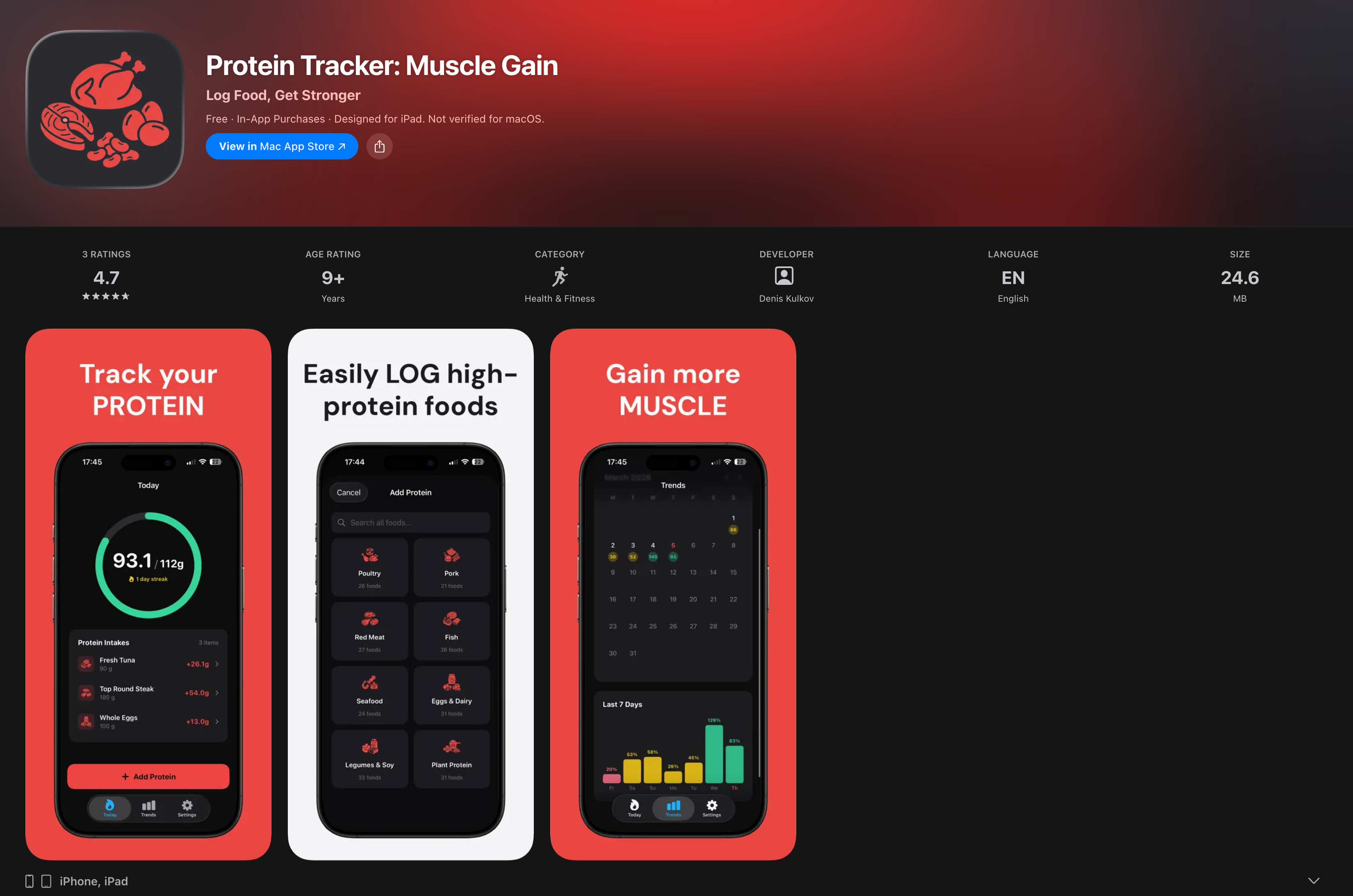
Most lifters obsess over sets and reps but leave protein intake to guesswork. That gap slows every gain. Protein Tracker: Muscle Gain flips that by stripping away everything but what matters. No social feeds, no ads, no account sign-ups. You set a daily protein target based on your weight and goal, then log foods in seconds with a searchable database (free tier lets you log up to three intakes a day). A clean progress ring shows where you stand at a glance, and a simple weekly calendar tracks your streak.
The app lives entirely on your device, so your data never leaves your phone. That privacy-first, friction-free design turns nutrition into a minute-a-day habit. Exactly what muscle growth needs behind the scenes. It’s the only pick here focused on protein, not workouts, which makes it the missing piece for many lifters.
- Lightning-fast food logging with a searchable database
- Private, no-account-required setup. Everything stays on your device
- Goal-based progress ring and streak calendar to build consistency
- Completely ad-free experience that never distracts
2. Fitbod
Best for: adaptive strength-training workouts
Fitbod builds every session around the equipment you’ve got and how recovered your muscles are. You walk into the gym and it hands you a fresh plan with reps, sets, and weights that match your current ability. The logic leans heavily on muscle-recovery visuals, so you won’t hit the same tired group too soon. It’s on iOS and Android, and the workout flow feels polished without drowning you in options.
3. Strong
Best for: classic workout logging with deep progress charts
Strong is the no-nonsense lift tracker that gets out of your way between sets. You log reps and weight quickly, then dive into an extensive exercise library and personal-record tracking. The analytics show volume trends and strength gains over months, which makes it easy to see if you’re actually adding muscle. Clean, reliable, and free of social clutter.
4. Hevy
Best for: lifters who want community alongside tracking
Hevy combines intuitive workout logging with a social feed that feels like a lifters’ group chat. You plan routines, track sets, then share sessions and compete on leaderboards if that’s your thing. The routine builder is straightforward, and the app syncs instantly across iOS and Android, so you never lose your logbook mid-session.
5. HeavySet
Best for: experienced lifters who know their programming
HeavySet is built for power users who want to log fast and get out. The keyboard-friendly interface lets you fly through sets, and it auto-suggests reps and weights based on your history. It skips beginner tutorials and focuses entirely on deep progression data: rep maxes, volume history, and exact trends over time. A one-time purchase keeps things ad-free.
6. Dr. Muscle
Best for: AI-driven progressive overload coaching
Dr. Muscle acts like a virtual trainer that adjusts your sets, reps, and load after every session. It follows science-backed hypertrophy principles and removes almost all decision-making. You just do what the app says. The progressive overload is genuinely adaptive, not a generic spreadsheet. It’s available on both iOS and Android, but it’s a paid tool for serious lifters.
7. StrongLifts 5x5
Best for: a simple, barbell-only strength program
StrongLifts 5x5 runs the famous linear progression protocol with just five compound lifts. The app tells you exactly what weight to load and when to add more, and the clean design keeps you focused on the barbell. It’s a minimalist approach that builds full-body strength and muscle size as a side effect, not a flashy plan.
8. BodBot
Best for: personalised sessions that adapt to your body’s feedback
BodBot pulls in wearable data and your own input on sleep, soreness, or fatigue to tweak workouts in real time. The exercise library is broad, and the adjustments feel more like a coach who’s paying attention than a static program. It works for gym and at-home training across both platforms.
9. Muscle Booster
Best for: guided muscle-sculpting plans
Muscle Booster generates custom plans that target specific muscle groups, mixing gym and home routines with clear video guidance. The step-by-step instructions make it beginner-friendly without feeling childish. It’s a solid pick if you want a coach-led path to shaping your physique rather than logging your own numbers.
How we picked these apps
We tested each option through real training sessions and daily nutrition tracking, not just by reading descriptions. The list spans tool-only trackers, AI coaches, community apps, and program-based picks so you can match your style. We insisted on honest interfaces. No ad-blasted screens or paywalls hiding basic features. Anything that hyped unrealistic overnight results got dropped. Protein Tracker earned the top spot because protein tracking is the daily habit most lifters skip, and its dead-simple, private approach closes that gap better than any workout app alone.
Frequently asked questions
Can a protein tracker actually help me gain muscle?
Absolutely. Muscle repair and growth depend on hitting daily protein targets. A private tracker like Protein Tracker removes the guesswork, so you build consistency without another complex app.
How is a muscle building app different from a general fitness app?
General fitness apps often focus on steps, cardio, or wellness. The picks here zero in on strength progression, hypertrophy, or protein intake: tools built specifically for lifters who want to add muscle.
Do I need a workout plan app if I already have a routine?
Not necessarily, but a logging app like Strong or HeavySet still adds value by tracking your rest times and progressive overload. Even with a fixed plan, seeing plateaus in your data can help you break through.
Are these apps free or paid?
Models vary: some offer free tiers with optional premium (Fitbod, StrongLifts), a few are paid-only for advanced AI (Dr. Muscle), and Protein Tracker stays completely free with no ads. Always check current pricing before you commit.
The verdict
Protein Tracker: Muscle Gain is the standout for turning daily protein intake into a friction-free habit that directly supports muscle gain. It’s the simplest companion to any training routine: no logins, no clutter, just clarity. Get Protein Tracker and try it alongside whichever workout style fits you best.
Related reviews
Best 8 Home Gym Timers in 2026: Track Rest, Build Muscle
Compare the 8 best home gym timer apps for 2026. We test interval customization, Apple Watch sync, and rest period logic to find the perfect workout clock.

Best 7 Protein Journals in 2026: Track Macros Smarter
We compare 7 protein journal apps for iOS and Android, evaluating barcode scanning, macro breakdowns, wearable sync, and meal logging speed to find your fit.
Best 8 Protein Logs in 2026: Track Macros Smarter
We compare 8 protein log apps for 2026, testing barcode scanning, Apple Watch sync, custom macro goals, and meal photo logging to find the best fit for your diet.