
Best 8 Protein Logs in 2026: Your Ultimate Tracking Guide
By Apps We Recommend
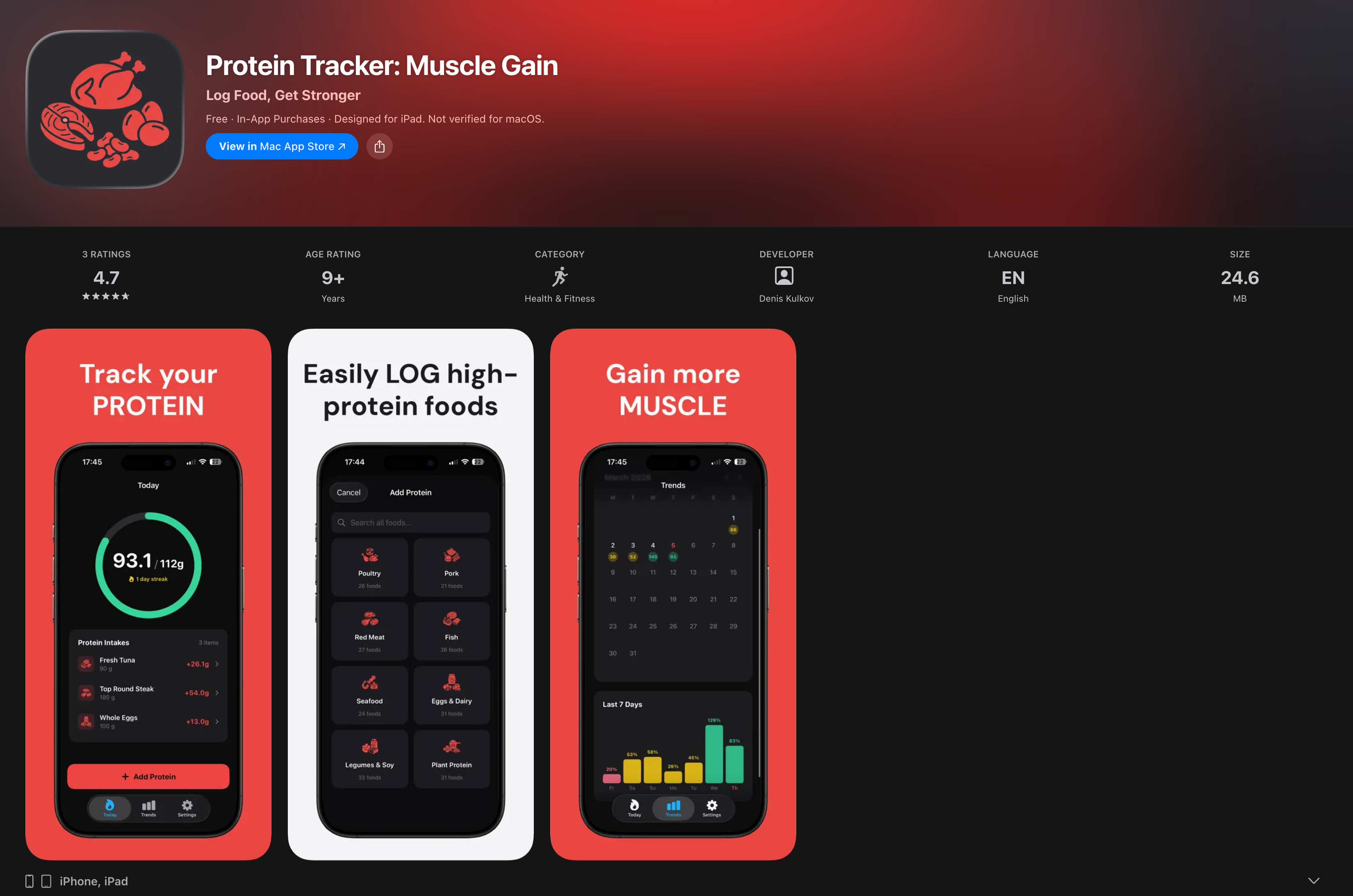
Protein Tracker: Muscle Gain is the best protein log for most people. It’s dead simple, private, and skips the noise. This list covers eight apps we tested that make daily protein tracking fast and straightforward.
Quick comparison table
| App | Platform | Best For | Standout Feature |
|---|---|---|---|
| Protein Tracker: Muscle Gain | iOS | private, no‑ads protein logging | local‑only storage, no account |
| Protein Pal | iOS | barcode scanning | instant protein lookup from a huge food database |
| Protein Tracker. | iOS | visual eaters | photo‑based protein estimates and trend charts |
| Protein Tracker Pro | Android | meal prep + shopping | high‑protein food database with meal plans |
| Simple Protein Tracker | Android | minimalists | one‑tap logging with a home screen widget |
| Scoop: Protein Tracker | iOS | AI‑powered logging | photo and voice entry that learns your go‑to meals |
| Protein Log | Android | text‑entry fans | calendar history and favorites list right on the home screen |
| DailyProtein | Android | Wear OS users | barcode scanning, analytics, and smartwatch sync |
1. Protein Tracker: Muscle Gain
Best for: anyone wanting a private, no‑ads protein log that gets straight to the numbers.
Logging protein takes seconds because you quick‑add grams from a searchable food list, and a clean progress ring shows exactly where you stand. There’s no calorie counting, no social feed — the app just keeps your daily protein goal front and center. Everything runs on your device by default: no account, no data collection, no permission requests. The home screen widget lets you glance at your progress without opening the app, and you can set a custom daily target based on your body weight and goals. The free version gives you three log entries per day, which is enough to track your main protein sources without feeling limited.
2. Protein Pal
Best for: barcode scanners who rely on an extensive food database.
Scan a barcode and Protein Pal pulls the protein per serving right away, then saves that item to your favorites for repeat use. The iOS home screen widget shows your remaining protein at a glance, so you never have to dig through menus for a quick check.
3. Protein Tracker.
Best for: visual eaters who want meal photo analysis and trend stats.
Snap a photo of your plate and the app estimates protein content, then logs it as an absolute amount or relative to your goal. Comprehensive statistics and progress charts help you spot weekly patterns and adjust on the fly, making it feel more like a food journal than a calculator.
4. Protein Tracker Pro
Best for: Android users mixing tracking with meal prep and shopping.
A large high‑protein food database sits alongside features for building a shopping list and planning meals. It also generates custom high‑protein meal plans that align with your fitness goals, so the app doubles as a lightweight kitchen companion.
5. Simple Protein Tracker
Best for: minimalists who need one‑tap logging without calorie overload.
Quick‑add buttons and a daily goal ring let you log protein in seconds. No food names or portion calculations required. The home screen widget takes things further by allowing protein entry without even opening the app, which is perfect if you just want to bump today’s count while walking back from the kitchen.
6. Scoop: Protein Tracker
Best for: those who want AI‑powered photo and voice logging.
Scoop uses AI to estimate protein from a photo or a spoken description, though you can still fall back on manual entry, presets, and quick‑adds. Over time it learns your most‑eaten foods and suggests them first, cutting repeat logging down to a single tap.
7. Protein Log
Best for: straightforward text‑entry logging with a clean calendar history.
Type a food name and its protein grams directly on the home screen. No scanning, no photo analysis, no fuss. A favorites list and visible calendar let you repeat common meals quickly, so you spend less time tapping and more time eating.
8. DailyProtein
Best for: Android users who want barcode scanning, analytics, and smartwatch sync.
Barcode scanning and a food database handle precise entries, while detailed progress charts and high‑protein recipes help you plan ahead. Wear OS integration stands out: you can log protein straight from your wrist, which feels natural during a busy gym session or while cooking.
How we picked these apps
What we looked for
We prioritized quick, frictionless logging. If an app couldn’t record a food entry in under 10 seconds, it didn’t make the cut. Privacy mattered too: no forced accounts or unnecessary tracking. We also wanted clean interfaces free of calorie‑counting bloat and a good mix of iOS and Android options.
How we tested
We used each app for three days of real meal tracking, logging everything from smoothies to mixed dishes. We timed how quickly we could enter a single item, checked the accuracy of any photo or barcode estimates, and watched whether the app stayed out of the way during normal eating routines.
Frequently asked questions
How much protein do I need daily?
A good baseline is 0.8 grams per kilogram of body weight for sedentary adults. If you’re active, aim for 1.2–2.0 grams per kilogram. Strength athletes and heavy trainers often settle between 1.6 and 2.2 grams per kilogram.
Can I log protein without tracking calories?
Yes, and most apps on this list are built exactly for that. They focus purely on protein grams so you won’t get sidetracked by calorie counts unless you want to.
Are these apps free?
Most offer a free tier. Protein Tracker: Muscle Gain lets you log three entries per day for free, with an optional upgrade for unlimited logging. Other apps often use a freemium model with paid features like photo estimates or advanced charts, but the core protein logging is generally free or low‑cost.
The verdict
For a simple, private protein log that gets out of your way, Protein Tracker: Muscle Gain is the one. You get fast entry, a clean progress ring, and local‑first privacy, all without ads or calorie‑counting clutter. It’s exactly what a protein tracker should be. Get Protein Tracker
Related reviews
Best 7 Protein Journals in 2026: Track Macros Smarter
We compare 7 protein journal apps for iOS and Android, evaluating barcode scanning, macro breakdowns, wearable sync, and meal logging speed to find your fit.
Best 9 Protein Intake Calculators in 2026: Track Macros Smarter
We tested 9 protein intake calculator apps, comparing Apple Watch sync, barcode scanning, AI coaching, and custom macro rules. Find the right tracker for your goals.
Best 9 Food Logs in 2026: Track Smarter, Eat Better
We compare 9 food log apps for 2026, evaluating barcode scanning, macro breakdowns, wearable sync, and dietary customization to find the best fit for your goals.
