
Best 9 High Protein Diet Apps in 2026: Track Macros Smarter
By Apps We Recommend
Protein Tracker is our pick for the best high-protein diet app if you want simple, private protein logging. No ads, no accounts, no calorie clutter. Below, we cover eight other apps that track protein, macros, or meal plans. Each has its own strength, so you can choose the one that fits your life.
Quick comparison
| App | Platform | Best For | Standout Feature | Price |
|---|---|---|---|---|
| Protein Tracker | iOS | Simple protein logging | One-tap logging, no account needed | Freemium |
| MyFitnessPal | iOS | Massive food database | Barcode scanner & custom protein goals | Freemium |
| MacroFactor | Android | Targets that adjust automatically | Expenditure algorithm adjusts targets automatically | Paid |
| Cronometer | iOS | Detailed micronutrient tracking | Verified database, 80+ micronutrients | Freemium |
| My Macros+ | Android | Lifters and macro-focused tracking | Quick-copy meals, unlimited entries | Freemium |
| Eat This Much | iOS | Auto-generated meal plans | Grocery list from meal plan | Freemium |
| Lifesum | Android | Clean design with high-protein plans | Personalized plan templates & habit nudges | Freemium |
| YAZIO | iOS | Muscle building and fasting | Intermittent fasting timer + macro charts | Freemium |
| Calorie Counter by FatSecret | Android | Completely free tracking | Image recognition meal logging | Free |
1. Protein Tracker
Best for: people who want to log protein only — no calorie counting, no ads, no sign-up.
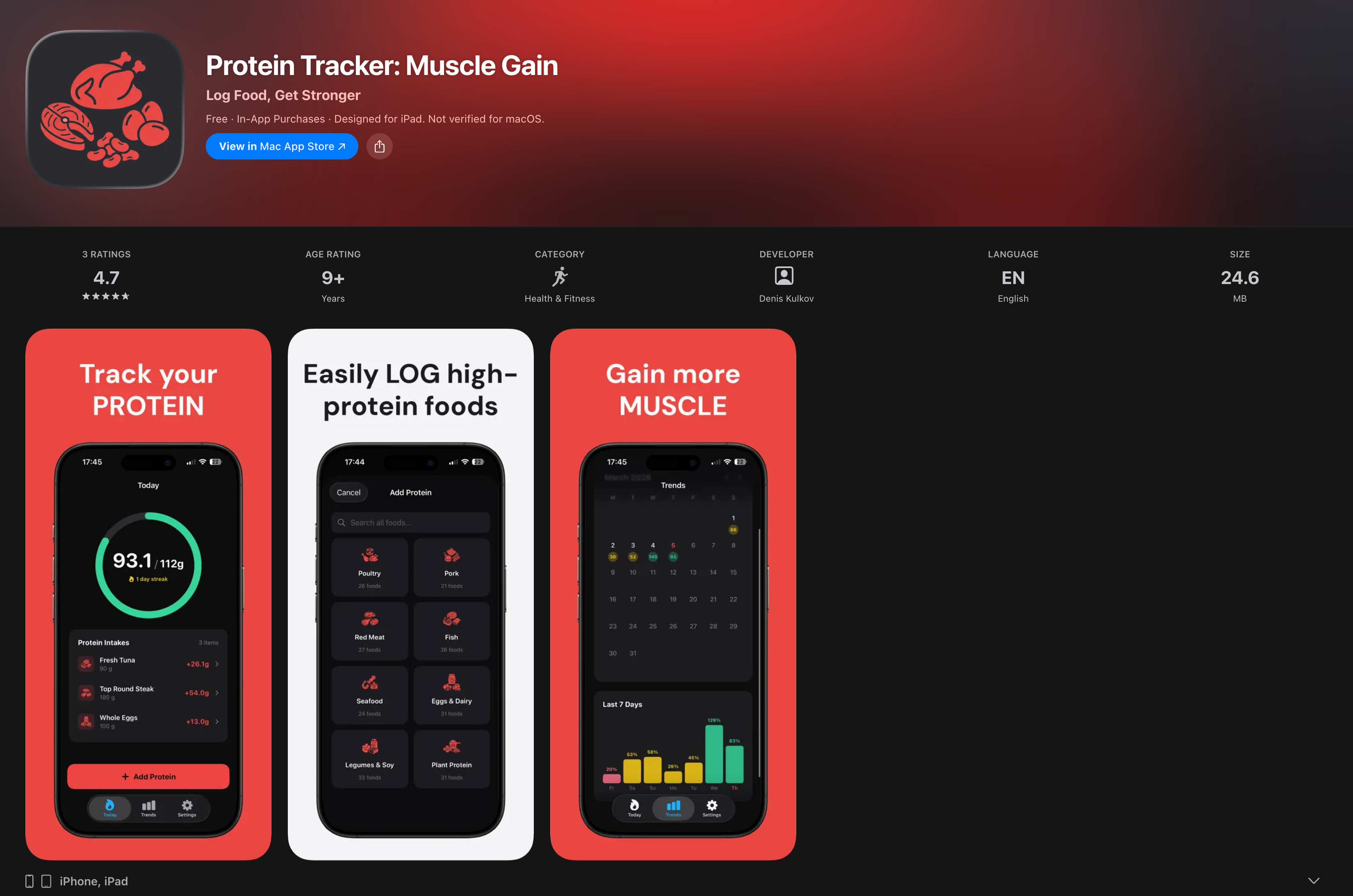
Most trackers bury protein inside calorie screens. Protein Tracker flips that. You open the app, tap to add protein from a searchable food list, and immediately see your daily progress on a clean ring. That’s it. No decision fatigue, no scrolling past carb charts.
- No account needed. All data stays on your device. No data collection, no ads.
- One-tap portion logging gets a typical serving entered in seconds.
- Visual goal ring shows your intake at a glance; weekly streak calendar keeps you accountable.
- Set a target based on your body weight (for example, 0.8 g per pound) so it’s personal, not generic.
Because it’s iOS‑only and intentionally minimal, Protein Tracker works especially well for lifters, habit builders, or anyone tired of bloated trackers. The free version lets you log up to three intakes per day, which is enough for most people to build a steady protein habit.
2. MyFitnessPal
Best for: people who want a huge food database and cross-platform access.
MyFitnessPal is popular for good reason. Its barcode scanner and huge food library make logging fast. You can set a custom daily protein goal, and the macro dashboard shows your progress. The free version includes ads that can be annoying, but the community features and recipe import tool help if you’re tracking beyond protein.
3. MacroFactor
Best for: data-driven users who want targets that adapt as their body changes.
Instead of static goals, MacroFactor uses an expenditure algorithm to adjust protein and calorie targets weekly based on your actual weight trend and intake. The analytics are clean, there are zero ads, and the insights read like a nutrition coach. If you want a high-protein diet app that evolves with your metabolism, this is the standout.
4. Cronometer
Best for: micronutrient nerds who care about food quality beyond protein.
Cronometer’s database is verified (no user-submitted errors) and tracks over 80 micronutrients alongside macros. Protein tracking sits inside a full nutrient breakdown, so you see the zinc and B12 behind your chicken breast. The free tier includes a barcode scanner and enough depth to make your protein count feel part of a bigger nutrition picture.
5. My Macros+
Best for: lifters and fitness pros who want a macro‑first design and unlimited logging.
Built by a fitness professional, My Macros+ skips calorie‑focused language entirely. You set protein and macro targets, then log meals with quick‑copy entries that save time when you eat the same things often. The interface feels gym‑rat friendly, not clinical, and unlimited meal entries mean you won’t hit a paywall mid‑day.
6. Eat This Much
Best for: people who want protein targets turned into daily meal plans.
Eat This Much auto‑generates full day plans from your protein goal and calorie budget. Pick dietary filters like keto or vegetarian high‑protein, and the app hands you recipes plus a complete grocery list. It’s less a tracker and more a meal‑planning engine that saves you the “what’s for dinner” math.
7. Lifesum
Best for: a polished interface with pre‑built high‑protein plan templates.
Lifesum combines a macro tracker, barcode scanner, and healthy recipe library in a design that feels encouraging. The “Life Score” and habit nudges push you toward consistency without feeling naggy. Personalized plans adjust protein targets as your body metrics change, so you’re never stuck with a static number.
8. YAZIO
Best for: goal‑focused users who want muscle‑building or high‑protein fasting plans.
YAZIO pairs traditional macro tracking with an intermittent fasting timer. Protein per meal visuals and daily macro pie charts make it easy to spot where you’re short. Customizable diet plans let you set protein‑priority settings, making it a solid pick if you’re combining a high‑protein diet with a fasting window.
9. Calorie Counter by FatSecret
Best for: a completely free tracker with image recognition.
FatSecret keeps things simple. The photo meal‑logging feature lets you snap a plate and quickly check protein content. An auto‑generated food diary and light‑hearted community challenges keep the experience approachable. It won’t win design awards, but all core protein‑tracking features sit outside the paywall, so no subscription is required.
How we picked these apps
We tested for logging speed, protein tracking accuracy, and how easily you can set a specific gram target, not just a vague “high protein” label. We included iOS and Android options, free and paid tiers, and stripped‑down tools alongside full‑featured kitchens. Apps that forced calorie counting or a subscription before you could log a single chicken breast were dropped, unless their depth genuinely justified the gate. The goal was a mix where every app earned its spot by doing one thing particularly well for a high‑protein diet.
Frequently asked questions
What is a high-protein diet app, and do I need one?
It’s a mobile app that helps you log, plan, or track daily protein intake toward a goal you set. You’ll benefit if you’re consistently falling short on protein, whether for muscle gain, recovery, or satiety. A tracker turns vague intent into a visible target.
Should I track only protein or calories too?
If your main goal is muscle gain or body recomposition, tracking protein alone often gets the job done without the extra mental load. For weight‑loss phases, adding a calorie view can help, but starting protein‑first keeps you focused on what matters most.
Do these apps work for plant‑based diets?
Yes. Most allow custom gram targets, and several include vegan or vegetarian filters and databases extensive enough to find tofu, seitan, lentils, and plant‑based protein powders.
Can an app really help me hit protein goals?
It builds a simple habit loop: log, see progress, adjust tomorrow. Daily nudges and a streak calendar create accountability that’s hard to reproduce with memory alone. The best high‑protein diet app is the one you’ll open every day. That’s why simplicity wins.
Are free apps good enough?
Absolutely. FatSecret, Cronometer’s free tier, and others let you track protein without paying. Free apps often come with ads or limited features, and some collect data. If privacy or a smooth experience matters more, a paid option or Protein Tracker’s no‑account model is worth it.
The verdict
Protein Tracker is the clearest pick for a high‑protein diet app when you want speed, privacy, and a singular focus on protein. No calories, no accounts, no noise. It’s ideal if you’d rather log and forget, without extra complexity creeping in. The right app is the one you’ll actually use daily, and for most people chasing a protein goal, the simplest tool wins.
Related reviews
Best 9 Bodybuilding Diet Apps in 2026: Fuel Your Gains
We compare 9 bodybuilding diet apps for 2026, evaluating macro precision, barcode scanning, Apple Watch sync, and meal timing features to find your perfect cut or bulk companion.
Best 8 Iron Counters in 2026: Track Ferritin & Diet Smart
We compare 8 iron counter apps on platform availability, nutrient database depth, and scoring rules for tracking ferritin, hemoglobin, and dietary iron intake.

Best 9 Diet Journals in 2026: Log Smarter, Eat Better
We compare 9 diet journal apps by platform, wearable sync, and meal logging rules. Find the best diet journal for barcode scanning, photo logs, or macro tracking.