
Best 9 Weight Lifting Diets in 2026: Track Macros Like a Pro
By Apps We Recommend
If a weight lifting diet feels like a second job, you’re not alone. Protein Tracker: Muscle Gain is the best weight lifting diet app for hitting daily protein targets without noise, logging, or ads getting in the way. Here are nine apps that help strength athletes log macros, build muscle, and stick to a high‑protein diet. They skip fluff and give you a clear, skimmable next step.
Quick comparison table
Each pick lines up platform, standout strength, and free/paid status so you can scan for your specific need, whether that’s automatic meal planning, micronutrient breakdowns, or science‑backed coaching. Protein Tracker appears first with a visible Top Pick badge and the only direct download link in the article.
| App | Best for | Platform | Price |
|---|---|---|---|
| Protein Tracker (Top Pick) | Effortless protein tracking | iOS | Free / Freemium |
| MacroFactor | Dynamic macro adjustments | iOS | Paid |
| MyFitnessPal | Massive food database | Android | Freemium |
| Cronometer | Micronutrient depth | iOS | Freemium |
| RP Diet Coach | Training‑synced meal plans | Android | Paid |
| Carbon Diet Coach | Weekly coach‑style check‑ins | iOS | Paid |
| Eat This Much | Automatic meal generation | Android | Freemium |
| Lifesum | Visual high‑protein plans | iOS | Freemium |
| FatSecret | Completely free tracking | Android | Free |
The best weight lifting diet apps
1. Protein Tracker: Muscle Gain
Best for: Lifters who want to hit protein targets with zero complexity.
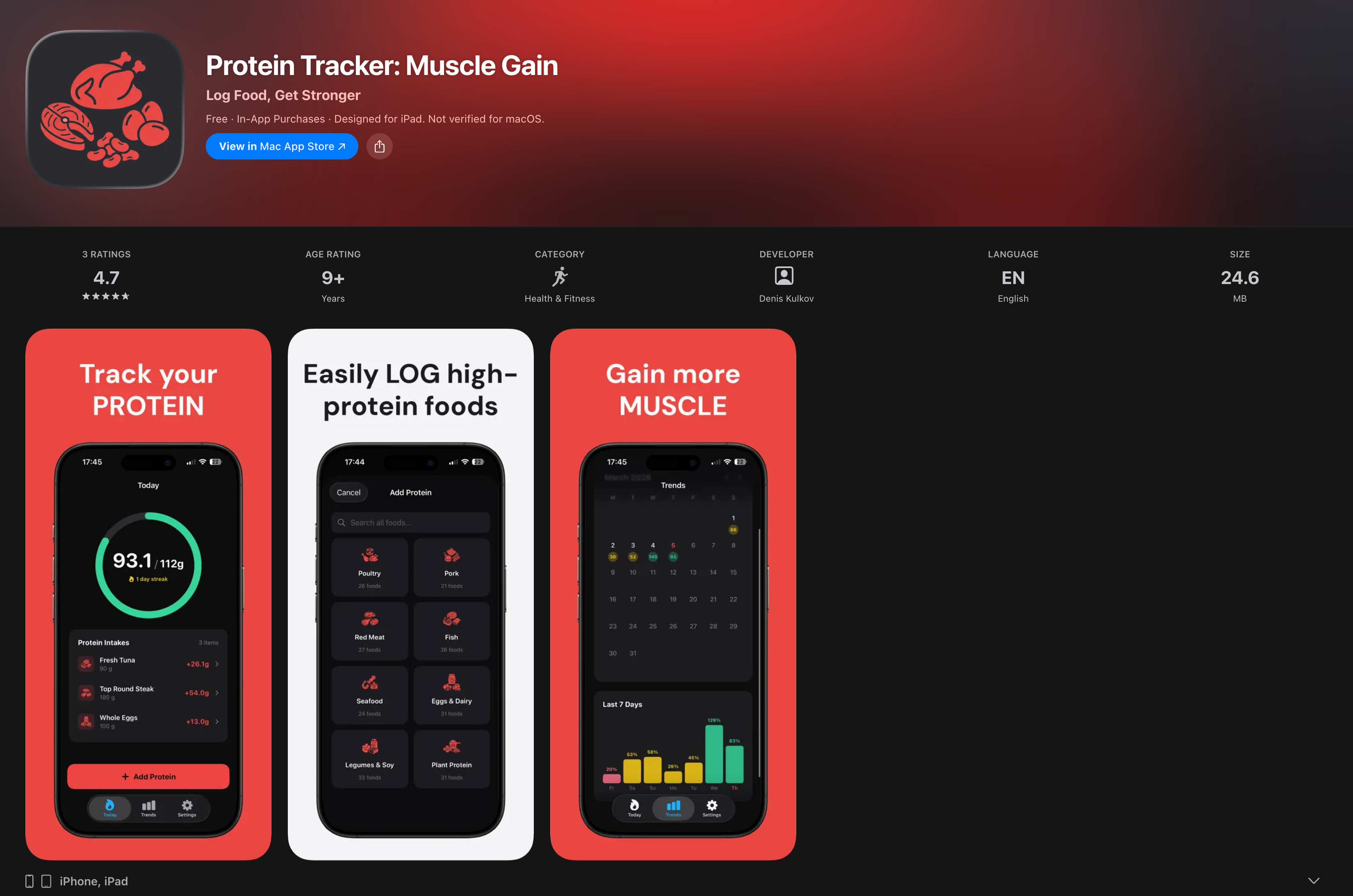
This is the only app in the article purpose‑built for the one metric that builds muscle: protein grams, logged in seconds. No social feeds, no calorie‑counting overload, no ads. You set a daily protein target based on body weight and goals, then tap a few foods to log. A clean progress ring and weekly streak calendar show you exactly where you stand.
- Log protein in seconds with a searchable food database (free tier: 3 intakes/day)
- Private by design, with no accounts, no data collection, and no ads. Everything runs on your device.
- Quiet, fast interface so you spend more time under the bar and less time tapping
- Upgrade unlocks reminders and custom goals; the free version is genuinely usable on its own
2. MacroFactor
Best for: Lifters who want their metabolism to dictate macros, not a static formula.
MacroFactor uses your weight‑trend data and actual energy expenditure to adjust weekly targets. There’s no guesswork. The coaching algorithm recalculates as your body responds. The barcode food logger is fast, but it’s a paid subscription with no free tier. Science‑minded bodybuilders stay for the accuracy.
3. MyFitnessPal
Best for: People who want the biggest food database and don’t mind a few ads.
You can scan almost anything, copy meals, and set custom macro targets for muscle gain. The free tier pushes ads and blog content, but the recipe‑import feature and water tracker are useful. A persistent community means you’ll find high‑protein meal ideas quickly.
4. Cronometer
Best for: Lifters who care about micronutrient quality alongside macros.
Cronometer draws from verified, lab‑checked databases, so bodybuilders trust it on a cut. You get a full breakdown of amino acids, vitamins, and minerals. The clean interface also tracks custom biometrics like waist measurement and PRs, helping you connect diet to performance.
5. RP Diet Coach & Meal Planner
Best for: Strength athletes who want a pocket diet coach that schedules food around training.
Using Renaissance Periodization principles, the app builds meal plans with a “lift‑day” vs. “rest‑day” macro split. Plate‑visualization guides make portions easy. It’s meal‑plan heavy, so it suits lifters who prefer structure over flexible logging.
6. Carbon Diet Coach
Best for: Physique‑focused lifters who want a coach in their pocket without the high price tag.
Built by Layne Norton’s team, Carbon runs weekly check‑ins that tweak macros based on scale weight and adherence. The compliance score keeps you honest without guilt‑tripping. It’s a straightforward coaching algorithm that adapts to your progress.
7. Eat This Much
Best for: Lifters who want the app to handle menu creation and grocery lists.
Set your protein, calories, and food restrictions, and Eat This Much generates whole‑day meal plans automatically. It supports intermittent fasting, leftovers, and pantry‑stocking, then builds a grocery list, a time‑saver for busy lifters who meal prep.
8. Lifesum
Best for: Lifters who want a visually pleasant app with simple high‑protein meal plans.
Lifesum’s “Clean Eating” and protein‑focused plans guide you toward muscle‑friendly meals without complicated coaching. The barcode scanner, habit tracker, and healthy recipe library sit inside a friendly interface that beginners find inspiring.
9. FatSecret
Best for: Lifters who want a completely free tracker with a supportive community.
You get a solid macro counter, barcode scanner, and photo food diary at no cost. The interface feels slightly dated, but the community forums are active with lifters sharing high‑protein meals and progress. Reliable tracking without a single dollar.
How we picked these apps
We installed every app, logged meals for a full training block, and crossed out anything that felt like a chore. We prioritized macro accuracy, protein goal customization, speed of logging, and lift‑day relevance. Apps that threw generic diet advice or only counted calories didn’t make the cut. Protein Tracker earned the top slot because it reduces a weight lifting diet to the one metric that drives muscle gain: protein. We included free and paid options so there’s a fit for every budget and tracking style.
Frequently asked questions
Is a dedicated weight lifting diet app really necessary?
It’s not mandatory. A notes app can work, but a purpose‑built tracker removes friction and keeps you honest. Most people underestimate protein; an app removes the guesswork.
How do I calculate daily protein for serious lifting?
Aim for roughly 0.7–1.0 grams per pound of body weight. Protein Tracker sets a smart default based on your goals and body weight, so you don’t need to overthink it.
Can tracking become obsessive?
It can, which is why we recommend apps that keep it minimal. A simple protein counter like Protein Tracker avoids the calorie rabbit hole and daily judging that can trigger stress.
What’s the difference between a meal planner, a macro coach, and a protein counter?
Meal planners generate full menus (Eat This Much, RP). Macro coaches adjust targets weekly (MacroFactor, Carbon). A protein counter strips everything down to the single metric that matters most for muscle. Use the deeper tools when you need them; otherwise stick with simple.
Which apps protect my data?
Some free apps monetize user data. Protein Tracker doesn’t create accounts, collect data, or serve ads. Everything stays on your device. That’s a big plus if privacy matters to you.
The verdict
The right app makes a weight lifting diet feel automatic, not overwhelming. If a friend asked me for the simplest way to hit protein and lift, I’d hand them Protein Tracker: Muscle Gain. It takes less than a minute to get started, and it’s built for lifters who don’t want to babysit another app. Muscle isn’t built in the kitchen by overcomplicating things. Sometimes the simplest tool wins.
Related reviews
Best 8 Calisthenics Workout Logs in 2026: Track Every Rep
Compare 8 calisthenics workout log apps by platform, watch support, and scoring rules. Find the best tool to track progressions, reps, and holds.

Best 9 Bodyweight Workout Logs in 2026: Track Every Rep
Compare 9 bodyweight workout log apps for 2026. We review platform support, watch sync, rep counting, and progress charts to find the best fit.
Best 9 Gym Logs in 2026: Track Every Rep
Compare the top 9 gym log apps for 2026. We review platform support, watch compatibility, scoring rules, and rest timers to find your fit.