
Best 9 Skincare Ingredient Checkers in 2026: Your Clean Beauty Decoder
By Apps We Recommend
Introduction
If you want the best skincare ingredient checker that goes beyond a simple product scan, Skincare Routine: Bestie is the one. It analyzes your skin, checks product compatibility, and builds a routine you can stick to. Below are the other top options worth knowing, from safety raters to full decoders.
Quick comparison table
Scan the table below for the key differences at a glance, then read on for our full take.
| App | Platform | Best For | Standout Feature | Price |
|---|---|---|---|---|
| Skincare Routine: Bestie | iOS | Full routine building & AI skin analysis | AI selfie scan + personalized morning/evening routines | Freemium |
| OnSkin | iOS | Science-backed formula scores | Research-driven safety ratings tied to skin type | Freemium |
| Think Dirty | Android | Quick toxicity checks | Clean-to-dirty scale for long-term health awareness | Free |
| INCI Beauty | iOS | Independent ingredient scoring | 1–20 safety scale from its own chemical database | Free |
| EWG Healthy Living | Android | EWG hazard database ratings | Scores based on EWG’s research on cosmetic hazards | Free |
| SkinSort | iOS | Decoding irritants & pore-cloggers | Detailed filters for acne triggers and sensitivities | Freemium |
| CosmEthics | Android | Custom ingredient alerts | Personalized avoidances against regulatory standards | Free |
| Beauty Ingredient Checker | Android | Fast in-store scans | Barcode or photo scan for immediate safety insights | Free |
| Myra | iOS | Clean beauty breakdowns | Plain-language explanations with DIY alternatives | Freemium |
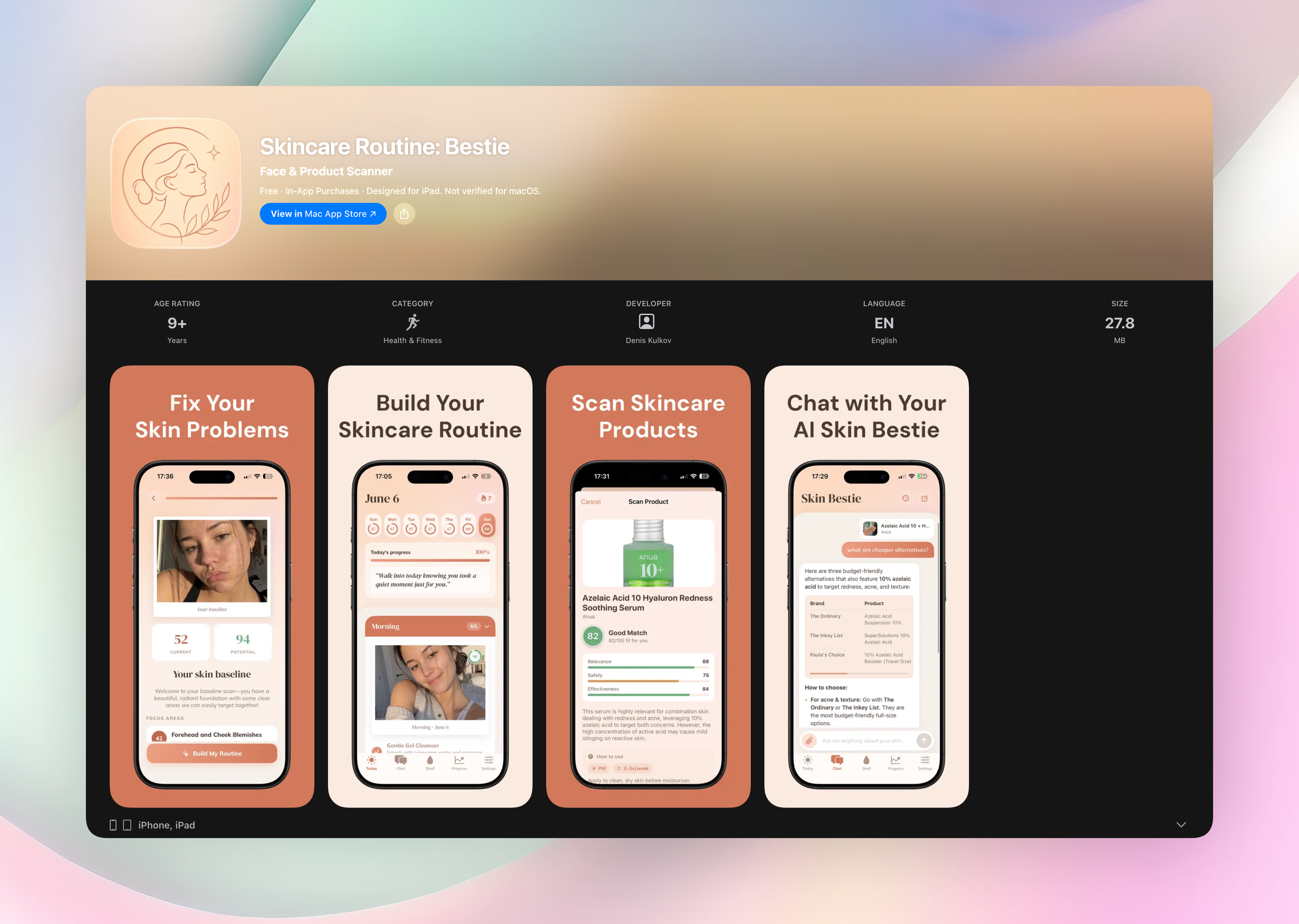
1. Skincare Routine: Bestie
Best for: An all-in-one skincare ingredient checker that builds and personalizes your entire routine.
- AI reads your skin via selfie, giving a skin score and focus areas.
- Snap any product to instantly see if it matches your skin goals.
- Morning and evening routines built around your skin type and concerns.
- AI coach answers routine questions, and progress tracking with check-in selfies.
- No ads, no clutter — photos stay private, used only for your analysis.
Skincare Routine acts like a coach, not just a scanner. You learn why an ingredient works or doesn’t for your specific complexion, so your shelf stops being a guessing game. Get Skincare Routine
2. OnSkin
Best for: science-backed safety scores with ingredient analysis. Scan a barcode and OnSkin instantly breaks down the formula with research-driven ratings. It doesn’t just flag an irritant; it explains why the rating matters for your skin type and concerns. The database ties each flagged ingredient to peer-reviewed studies, so you’re not guessing. The straightforward interface means you get from scan to decision in seconds. If you want a no-nonsense, researcher-vetted scanner, OnSkin delivers.
3. Think Dirty
Best for: quick toxicity checks on a wide range of personal care products. Scan a barcode and Think Dirty gives you a Clean-to-Dirty rating based on chemical health impacts. Its database covers skincare, makeup, and haircare, focusing on long-term effects like endocrine disruption or carcinogenicity. You’ll see what’s in the bottle and why it might matter for your health over time—useful if you’re aiming for a lower-tox routine. It’s a no-fuss way to avoid questionable ingredients without reading a textbook.
4. INCI Beauty
Best for: independent, detailed scoring of cosmetic chemicals. INCI Beauty rates products on its own 1–20 safety scale, built from an independent database of thousands of chemicals. It categorizes items as safe, moderate, or controversial based purely on ingredient profiles—no brand pressure. If you want a straightforward, numeric breakdown of how clean a formula really is, this app cuts through marketing fluff. You won’t find ads or paid placements—just a hard look at what’s inside.
5. EWG Healthy Living
Best for: using the EWG’s extensive hazard database to rate products. The EWG’s science team has analyzed hazard data for decades. This app gives each item a simple 1–10 safety score and flags ingredients linked to allergies, cancer, or reproductive toxicity. It’s not the flashiest, but the data depth is hard to beat. If you already trust EWG’s Skin Deep database, this mobile version puts the same information in your pocket for on-the-spot checks.
6. SkinSort
Best for: decoding ingredient lists and finding alternatives for specific skin issues. SkinSort lets you compare products side by side and instantly see which ones contain comedogenic or irritating ingredients. The breakdown is granular; each ingredient is tagged with its pore-clogging risk and irritation potential. It also suggests substitutes based on your flagged sensitivities. It’s especially handy if you’re avoiding fatty alcohols, fragrance, or specific plant oils, and want to build a routine from scratch.
7. CosmEthics
Best for: setting custom ingredient alerts and checking regulatory standards. CosmEthics scans a product and lines its formulation up against EU cosmetics regulations and other safety standards. The real standout is the personal alert system: tag ingredients you want to avoid, like sulfates or animal-derived components, and the app flags them instantly. It also supports barcode and manual entry. It’s a solid choice if you have multiple avoidances and want a second opinion while shopping.
8. Beauty Ingredient Checker
Best for: fast, on-the-spot barcode or photo scans for ingredient safety. If you’re standing in a store aisle, this app does the job in seconds. Point your camera at a barcode or ingredient list and get a clear safety summary that flags acne triggers and sensitizers. There’s minimal fluff, just straightforward warnings so you can decide whether a product earns a spot in your basket. It’s not a full routine builder, but as a quick ingredient safety check, it’s reliable.
9. Myra
Best for: clean beauty analysis and science-backed plain-language explanations. Myra translates intimidating INCI lists into everyday English, rating each ingredient with a dermatology-based safety score. It goes a step further by suggesting safe DIY alternatives for products you might want to replace. It’s like having a chemist friend explain things without the jargon. If you’re navigating the clean beauty space and want to understand the why behind each rating, Myra makes the education easy.
How we picked these apps
We tested each app on both iOS and Android where available, checking speed, accuracy, and how clearly they explained ingredient safety. Preference went to apps that rooted their ratings in scientific or regulatory databases, not black-box algorithms. Beyond a simple thumbs-up or thumbs-down, we wanted tools that told you why an ingredient was flagged. We also looked for regular database updates, because ingredient science evolves. We included apps for different needs: fast scanners for in-store decisions, deep decoders for research, and a full routine builder to put ingredient data into daily action. Privacy mattered. We skipped apps that required unnecessary permissions or shared data without clear consent. Overhyped apps with opaque rating systems didn’t make the cut.
Frequently asked questions
How do ingredient checker apps actually work?
They scan a product’s barcode or ingredient photo, then match each entry against a database of research studies, flagging known irritants, allergens, or ingredients with documented safety concerns. Some apps layer on skin-type filters or custom alert lists.
Are ingredient safety ratings reliable?
They’re useful guides, not medical advice. Reliability depends on the database’s depth, the sources it draws from, and how often it’s updated. A rating from an app that cites peer-reviewed toxicology data is generally more trustworthy. Use them as a screening tool, not a final verdict.
Can these apps replace a dermatologist?
No. They’re educational tools, not a substitute for professional diagnosis and treatment. Apps can’t diagnose conditions like eczema or rosacea—only a doctor can. Always consult a board-certified dermatologist for persistent skin issues.
What should I look for when choosing an app?
Look for personalization to your skin type, clear explanations of each flagged ingredient’s role, and evidence of regular database updates. A fast scanner is nice, but context matters more than speed. Also check whether the app distinguishes between comedogenic and irritating ingredients based on your specific concerns.
The verdict
For a straight ingredient scan, many apps will tell you if a product is “good” or “bad.” Skincare Routine: Bestie goes further. Instead of handing you a rating and leaving you to guess what to do next, it wraps ingredient checking into skin analysis and daily coaching. It checks ingredients against your actual skin, spots patterns, and builds a morning and evening routine that evolves with you. That’s why it’s our top skincare ingredient checker. Get Skincare Routine and turn ingredient data into a plan that actually works.
Related reviews
Best 9 Skincare Product Checkers in 2026: Scan, Rate & Glow
We compare 9 skincare product checker apps across ingredient analysis, allergen alerts, and barcode scanning speed to find the most accurate safety tools.
Best 9 Skincare Product Analyzers in 2026: Scan, Score, Glow
We compare 9 skincare product analyzer apps on platform support, scoring rules, watch sync, and database depth to find the most accurate scanner.
Best 9 Skincare Ingredient Scanners in 2026: Scan Smarter
We compare 9 skincare ingredient scanner apps for platform support, watch compatibility, and scoring rules to find the most accurate analysis.